
Why "Just You and a Stranger" Isn't the Only Way to Video Chat
If you ever spent time on Omegle back in the day, you already know the format: you click a button, the site pairs you with a random person somewhere on the internet, and the two of you talk (or don't) until someone hits skip. That was the entire model for basically the whole random-chat era. One person, one stranger, one video window. It worked, and for a lot of people it was genuinely fun, but it also meant you were always doing it alone. If the conversation stalled, there was no one next to you to pick up the slack. If the other person turned out to be weird, you were the only one deciding whether to stay or leave.
Duo Mode on Aznabee starts from a different premise: what if you didn't have to do this by yourself? Instead of always entering the queue as a solo participant, you can bring a friend along, connect with them privately first, and then step into a random match together. You still end up talking to strangers - that part hasn't changed - but you're doing it as a pair instead of a lone wolf. It's a small structural change that ends up affecting almost everything about how the conversation feels.
This isn't a niche gimmick tacked onto the side of the product. It reflects a pretty simple observation: a lot of people who'd enjoy random video chat are hesitant to do it alone, but would happily do it with a friend sitting next to them, laughing at the same jokes. Duo Mode is built for exactly that group.
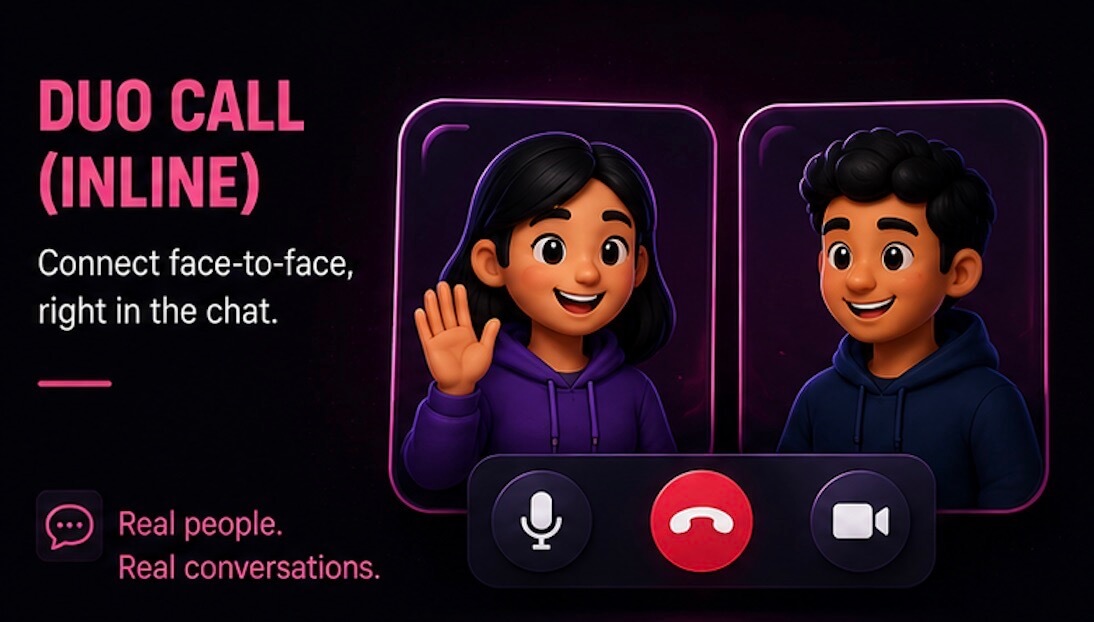
How Duo Mode Actually Works, Step by Step
The mechanics are intentionally simple, because the whole point is to remove friction, not add it. Here's the flow from the perspective of two friends who want to try it together.
One person starts things off by creating a private Duo room. The moment that room is created, Aznabee generates a short 6-character invite code tied to it. That code is the only thing needed to bring a second person in - there's no account to set up and nothing to install, in keeping with how the rest of the site works. The room creator shares that code however is convenient: text message, a group chat, reading it out loud over a call, whatever's fastest.
The second friend then opens Aznabee, enters that 6-character code, and joins the room. At this point, before any stranger is involved at all, the two friends are connected directly to each other with a live video preview, so they can see and hear one another and confirm everything is working - camera on, microphone picking up sound, connection stable. This step matters more than it might seem: it means by the time a stranger gets added to the mix, both friends already know their setup is solid instead of troubleshooting audio issues in front of someone new.
Once both people are happy with the preview, the host starts matching, and the duo enters the matching queue as a single unit. From the matching system's point of view, it isn't looking for one person - it's looking for one solo stranger to join the pair, making a three-person call. When a match is found, the group video chat begins, and everyone involved has access to the same controls that exist everywhere else on the site: skip, report, and the same AI-driven moderation running quietly in the background regardless of whether you came in solo or as a pair.
That's really the whole system. Create a room, share a code, preview each other, get matched with one stranger. Nothing about it requires technical know-how, and nothing about the safety tooling gets switched off or watered down just because there are two of you instead of one.
Why Having a Friend There Changes the Feel of the Conversation
The mechanics are simple enough to explain in a paragraph, but the actual experience of chatting as a duo is where the interesting part happens. A few things shift once there are two of you on one side of the screen.
The first is pressure. In solo 1:1 chat, if there's an awkward silence, it's yours to fill. You're the only one who can ask the next question or crack the next joke. That's fine for plenty of people, and plenty of great conversations start that way, but it's also exactly why some people never try random chat in the first place - the idea of being solely responsible for keeping a conversation with a total stranger alive is intimidating. With a friend next to you, the burden is split. If you go blank, they jump in. If they go blank, you do. Conversations end up feeling less like a performance and more like something you're doing together.
The second is the reaction factor. Part of what makes hanging out with friends fun is watching each other react to things in real time - the look on your friend's face when something unexpected happens, the shared laugh at an inside joke the stranger has no idea about, the quick glance that says "wait, did that really just happen?" None of that exists in solo chat, because there's nobody next to you to share it with. In Duo Mode, that layer of shared reaction is built into the format, and it's a big part of why people describe it as feeling more like a hangout than a cold introduction.
The third is a kind of built-in social safety net. This isn't about any special moderation feature turning on for duos specifically - the same skip, report, and moderation tools exist everywhere on Aznabee. It's simpler than that: having a second real person on your side of the call, someone you already trust, means you're never navigating an uncomfortable interaction completely alone. A friend can back you up, help you decide together to skip, or just make an odd moment feel less strange because you're processing it together instead of by yourself. If you want a broader look at how the platform keeps every mode secure, the video chat safety page walks through the moderation and reporting tools in more depth.
A Few Situations Where Duo Mode Makes Obvious Sense
It helps to picture actual moments where reaching for Duo Mode over solo chat feels natural rather than theoretical.
- Two friends who are bored on a Saturday night and don't feel like doing the same old thing. Instead of scrolling separate feeds on separate couches, they hop into a Duo room together and spend an hour meeting random people, turning a slow evening into something a little more unpredictable.
- Roommates killing time between classes or after work, who'd rather do something together than each disappear into their own phone. Duo Mode gives them a shared activity that's still spontaneous and a little bit silly.
- Gaming buddies who already spend hours in voice chat together and want to meet other people who are into the same games. Jumping into a group video chat as a pair means they can talk about strategies, ask the stranger what they're playing, and generally geek out together rather than one of them having to carry that conversation solo.
- Siblings hanging out during a break, looking for something to do that doesn't involve a screen each and zero interaction. Doing something together, even something as simple as chatting with strangers online, ends up being more memorable than watching separate videos in the same room.
None of these examples require any special setup beyond what's described above - the same invite code and matching flow applies in every case.
Solo 1:1 Chat vs. Duo Mode: When to Pick Which
Neither mode is objectively better - they're suited to different moods and different reasons for showing up in the first place.
Solo 1:1 matching is the classic format, and it's still the right choice a lot of the time. It's more direct and more intimate, since it's just you and one other person with nothing else in the mix. If you're hoping for a focused one-on-one conversation, want to practice a language with a native speaker without an audience, or you'd simply rather explore the best Omegle alternatives at your own pace, solo mode keeps things simple and undivided.
Duo Mode is the better call when the goal is a shared experience rather than a one-on-one connection - when you and a friend want to do something together rather than each having your own separate conversation somewhere else. It's also a natural fit if you're new to the whole idea of random video chat and want a lower-pressure way to ease into it, since you're never the only person on your side of the screen.
Plenty of people use both, switching between them depending on whether a friend happens to be around and in the mood, or whether they're in the mood for a quieter one-on-one conversation instead. There's no commitment either way - it's just a different entry point into the same underlying idea of meeting someone new.
Getting Started
If you want to see how it feels rather than just read about it, the fastest way is to try it. Grab a friend, head to Aznabee, create a Duo room, and send them the invite code. From there it's just a preview, and a match away from your first group conversation with a stranger.
For more on the platform itself, including how it approaches privacy and moderation, the about Aznabee page and privacy policy are worth a look, and the terms of service cover the ground rules that apply no matter which mode you're chatting in.
Ready to try it? Head to Aznabee to start a free random video chat right now - solo if you're in the mood for a one-on-one conversation, or Duo Mode if you'd rather bring a friend along for the ride.