
Why Manners Matter More When You Don't Know Who's Watching
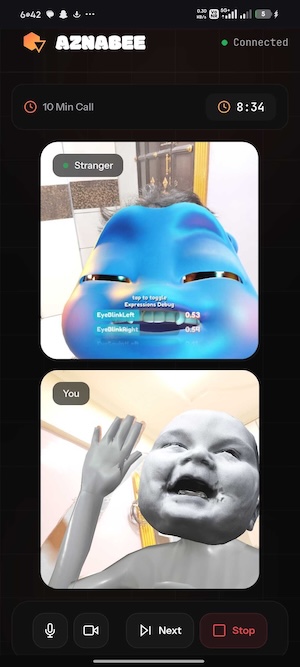
There's a strange paradox in random video chat: the less accountability you feel, the more your behavior actually matters. When you're on a call with a coworker or an old friend, shared history smooths over an awkward pause or a bad joke. With a stranger on a random video chat platform, you have none of that cushion. The first fifteen seconds of eye contact, the way you react to a laggy connection, whether you actually listen before responding - that's the entire relationship. There's no reputation carried over from the last conversation, and no guarantee of a next one, so every small choice reads louder than it would anywhere else.
That's also exactly why etiquette gets treated as an afterthought by so many users, and why it shouldn't be. If you've read our beginner's guide to random video chat, you already know the basics of getting set up. This piece goes further: twenty specific, practical habits that separate a genuinely good conversation partner from someone people skip in the first ten seconds. None of this is "just be nice" advice - it's the concrete stuff that actually shows up on screen.
Starting the Conversation Well
The opening moments of a random call decide almost everything. Most people make a snap judgment before either person has said a full sentence, so how you show up matters more here than in almost any other kind of conversation.
1. Say something specific, not just "hi." A flat "hey" or "sup" gives the other person nothing to respond to. Comment on something you can actually see - their background, a pet walking through frame, the time zone difference implied by the lighting. It signals you're paying attention rather than mass-clicking through calls.
2. Give your camera a second to catch up before you judge theirs. Connections take a moment to stabilize, especially on mobile data. Don't skip someone in the first two seconds because their video looked frozen - that's often just the codec negotiating, not a preview of the whole conversation.
3. Lead with an actual question, not a checklist. "ASL?" or a string of demographic questions feels like an interrogation. Ask one open question that could go somewhere - a hobby, what they're doing later, what part of the world they're in - and let the conversation branch naturally from the answer.
4. Match their energy before you try to change it. If someone opens quiet and a little shy, don't immediately blast them with high-energy jokes. Read the room for thirty seconds before deciding whether to bring more enthusiasm or dial it back.
5. Introduce yourself the way you'd want to be greeted. A first name, a general region, or a shared interest is plenty. You don't need a biography, but total silence about who you are makes the other person do all the conversational work alone.
Camera and Audio Manners
Video chat etiquette is partly about words, but a huge amount of it is nonverbal - and on a platform built around live camera feeds, small technical habits carry real social weight.
6. Frame yourself like you'd want to see the other person. Centered, reasonably lit, camera near eye level. A face lit from below by a phone screen or shot from a nostril-first angle isn't a dealbreaker, but it does make the other person work harder to connect with you.
7. Mute background noise, don't just talk over it. If you're in a loud room, a blaring TV, or walking outside, use the mute button between your own turns rather than assuming the other person can filter it out. Constant background chaos reads as disrespect for their listening effort, even if that's not the intent.
8. Don't multitask on camera. Scrolling your phone, gaming in another window, or clearly half-watching something else while "chatting" is obvious to the other person, even when you think it isn't. If you need to step away, say so - don't just quietly check out while still on screen.
9. Keep your hand off the skip button while a sentence is still forming. Reacting to the first half-second of someone's video before they've even said anything is one of the more common - and most noticeable - habits in random chat. Give people a beat to actually start talking.
10. If your setup has real technical problems, say so early. A dying microphone, unstable Wi-Fi, or a camera that only works at a weird angle isn't something to apologize for repeatedly, but naming it once upfront ("sorry, my mic cuts out sometimes") saves both people from assuming the other is being rude when it's really just the connection.
How and When to Skip Politely
Skipping is a completely normal part of random video chat - nobody expects every match to become a long conversation. The etiquette question isn't whether to skip, it's how.
11. A quick "nice talking to you, take care" beats a silent disappearance. You don't owe anyone an extended goodbye, but a one-line sign-off takes two seconds and leaves the interaction on a better note than an abrupt cut.
12. Don't skip mid-sentence out of impatience. If someone is clearly in the middle of answering something you asked, let them finish. Cutting away the instant a conversation dips in energy, rather than waiting even a moment, is one of the more common minor frustrations in this format.
13. It's fine to skip for no dramatic reason. You don't need to fabricate an excuse or fake a technical issue to leave a chat that's simply not clicking. A neutral "I'm going to hop to the next chat, good luck" is honest and doesn't require justification.
14. Skip immediately, without any explanation, if something feels off. This is the one exception to slowing down - if a conversation turns inappropriate, aggressive, or makes you uncomfortable, you don't owe politeness at all. Skip or end the call and, where the feature is available, report it. Platforms with active moderation, including Aznabee's AI-assisted content screening, rely on users flagging bad behavior to keep the whole system healthier for everyone else.
Respecting the Other Person's Boundaries
Anonymity removes social consequences, which is exactly why boundaries need to be respected more deliberately here than in ordinary conversation, not less.
15. Ask before assuming a topic is open for discussion. Not everyone wants to talk about relationships, appearance, location specifics, or personal problems with a stranger three minutes in. If someone deflects a question, take the hint rather than circling back to it.
16. Don't pressure anyone to turn their camera on, stay longer, or add you elsewhere. If someone wants to keep the call brief, video-only, or without exchanging any other contact info, that's the whole point of a platform designed for anonymous, no-signup conversation. Respect it as the default, not as something to talk them out of.
17. Recognize that "no" doesn't need a reason. If someone declines to answer a question, share a detail, or continue the conversation in a direction you're pushing, that's a complete sentence. Repeating the request differently is still pressure.
18. Remember that Duo Mode conversations involve two people you don't fully control. If you're chatting with a friend on the same call, keep in mind the stranger on the other end is now managing two personalities at once. Don't let side conversations with your friend exclude or confuse the person you matched with.
Small Habits That Turn You Into the Person People Skip
Some etiquette failures aren't really rule-breaking - they're just habits that quietly make you unpleasant to talk to, often without the person realizing it.
19. Interrupting every third sentence. Random chat conversations are naturally a little halting because of latency, so talking over someone repeatedly compounds the awkwardness instead of moving past it. Let a half-second gap pass before responding.
20. Ghosting mid-conversation without a word. Freezing the video, going silent, or clearly walking away without saying anything leaves the other person talking to a stalled screen, unsure if you're still there. If you need to leave, a sentence takes less effort than the silence does.
Bonus: treating every match like it should become something more. Not every conversation needs to lead anywhere - a five-minute chat that's pleasant and then ends is a completely successful outcome. Chasing every match for contact details or trying to extend calls past their natural end tends to make people cautious rather than interested.
The Bigger Picture
None of these habits require charisma or a script. They're mostly about paying attention - to timing, to signals the other person is sending, and to the fact that a stranger on the other end of a random video chat is a real person having a real moment of their day, not a slot machine lever. If you want to understand more about how the underlying connection actually works, our explainer on how WebRTC powers video chat covers the technical side of why calls sometimes lag or drop, which helps put some of these etiquette situations in context.
Good etiquette also compounds. Platforms that attract more considerate users tend to stay pleasant longer, which is part of why moderation, reporting tools, and community norms matter as much as the technology itself - something we go into more in our overview of video chat safety. If you're evaluating where to actually have these conversations, our comparison of the best Omegle alternatives is a useful starting point for weighing features like duo calling, filters, and moderation quality against each other.
Ready to put these habits into practice? Aznabee is a free, no-signup random video chat built with WebRTC, Duo Mode for chatting alongside a friend, AR filters, and AI-assisted moderation to keep conversations on the level. Start a free random video chat and see how far a little consideration goes toward a genuinely good conversation.